
Church Management Software India: 2026 Guide
Manual church administration was never built to scale. A system that holds together at 60 members starts failing at 150 - and by 250, it's genuinely struggling. This article covers what church management software actually does for Indian churches, what features are worth paying attention to, and why pastors who swore they'd never need it are now the ones recommending it.
Church management software in India is no longer something only large, well-funded churches think about. Small congregations of 80 members in Nagaland are using it, in fact, software matters even more for small churches than people assume.. Mid-sized churches in Kerala are switching from Excel. Pastors who swore they would never need software are now the ones recommending it to their peers.
Something has shifted. This article is about what that shift actually looks like - why it is happening, what it changes inside a church, and what to look for if your church is considering making the move
What Has Changed for Indian Churches
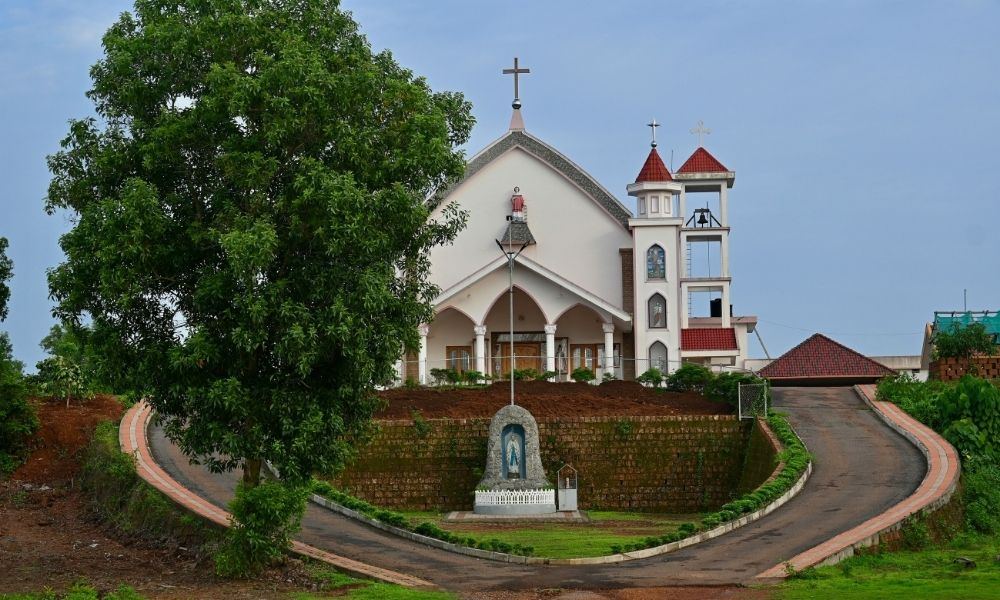
A congregation member in India pays their electricity bill on PhonePe. They transfer money to their family using UPI. They book train tickets without going to a station. Then they walk into church on Sunday and the secretary is writing their name into a register by hand.
That gap is becoming harder to ignore.
This is not about image or appearing modern. It is about the practical reality that people now expect systems to work and when a church's administrative systems do not, it creates friction. Missed communications. Lost records. Financial updates that take weeks to prepare.
Indian churches are growing. Ministries are branching out. The number of members a single administrator is expected to track has gone up significantly over the last decade. Manual systems that held things together at 60 members start failing at 150. By 250, they are genuinely struggling.
Before we explore more, readers who are new to digital ministry systems may first want to understand how modern church management software works and how it helps churches handle administration, communication, and member engagement more effectively.
Why Manual Administration Breaks Down

The honest answer is that manual administration was never designed to scale. It was designed for small, stable communities where everyone knew everyone. That describes fewer and fewer Indian churches today.
Three things in particular tend to cause real problems.
-
Member records
When records live in registers and spreadsheets, finding specific information takes time. Tracking a family across multiple registers - adult members, children, cell group attendance, giving history - means cross-referencing several documents that may not match each other. When a church secretary leaves, that institutional knowledge often walks out with them.
-
Communication
Most churches use WhatsApp groups as their primary communication channel. This works until it does not. Messages get buried. Members leave groups. Different ministries run different groups with no coordination. There is no reliable way to know whether an announcement actually reached the people it was meant for.
As highlighted in India’s digital communication trends, people increasingly rely on mobile messaging and social platforms for everyday communication. Without a unified platform, many members of your community will miss the important information you have to share with them.
-
Financial tracking
Recording donations by hand, generating receipts manually, and preparing financial reports from a ledger is slow and error-prone.
Launch your church into the future
Everything your ministry needs — giving, events, members, and more. Try it free, no credit card required.
Start Free Trial No credit card • Cancel anytimeWhat Church Management Software Actually Does for Indian Churches
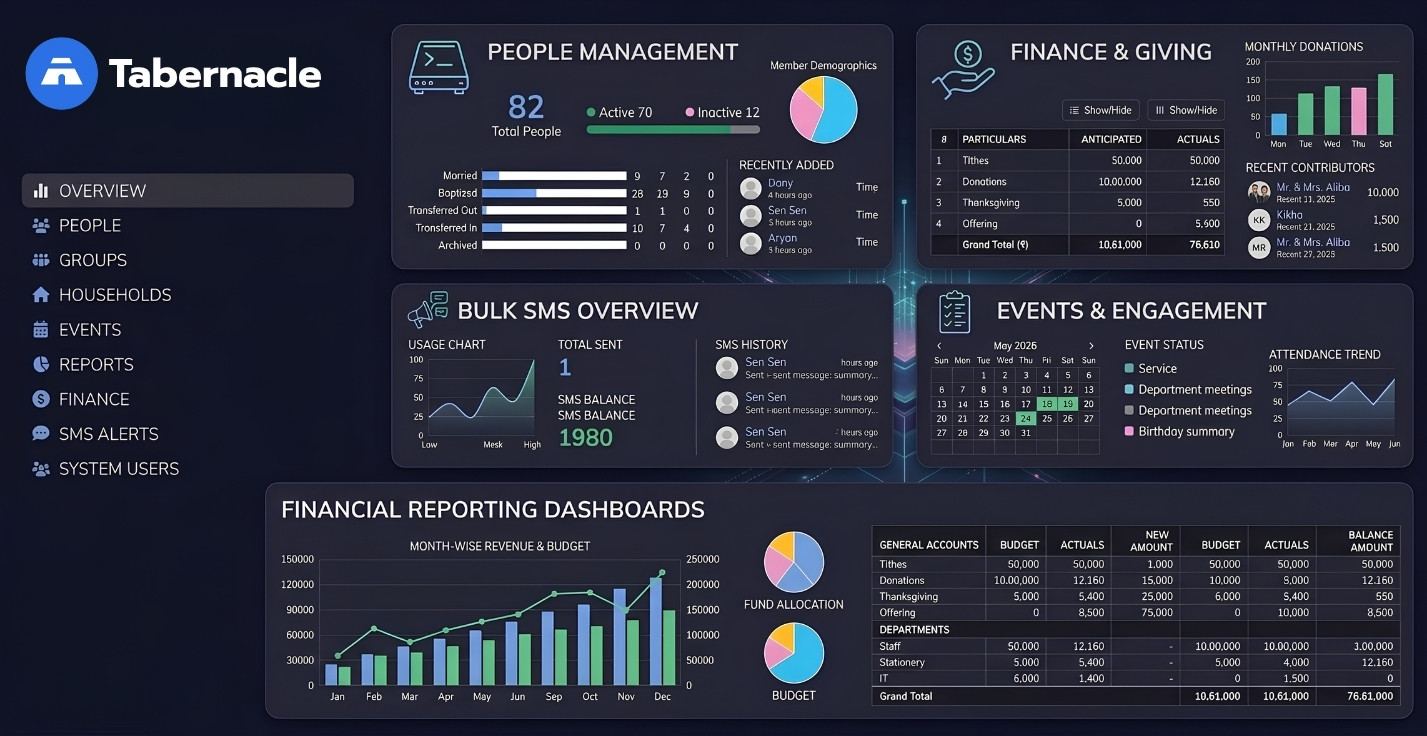
For a church in India, church management software is not a single feature - it is a system that connects the things a church already does and makes them easier to manage in one place.
-
Member management
Every member has a profile - name, family details, contact information, cell group, ministry involvement, attendance history. The pastor can see who has been absent for three weeks. The secretary can pull up a member's giving history in seconds. New members get followed up with automatically.
-
Finances and donations
Every donation is recorded when it comes in, whether it is cash, UPI, or bank transfer. Receipts go out automatically. The treasurer can generate a financial report before a board meeting without spending two days preparing it. For a detailed look at how this works specifically for Indian churches, our Church Accounting covers the specifics.
-
Communication
Instead of managing five WhatsApp groups and hoping messages reach the right people, bulk SMS goes directly to members' phones. Youth ministry updates, prayer group notifications, event reminders - all sent from one place, with delivery confirmation.
-
Events and volunteers
Scheduling volunteers, tracking registrations, sending reminders - all managed from the same system instead of coordinated across separate spreadsheets and message threads.
-
Reports
Attendance trends over time. Giving patterns by month. Budget utilization by ministry. This kind of information helps church leadership make better decisions - not based on memory or gut feel, but on actual data.
Watch a video of how a Church Software can help in simplifying the daily operations and help the church run more smoothly.
What to Look for in Software Built for Indian Churches
Not all church software works the same way in an Indian church context. Software built for large American megachurches tends to be overly complex, uses terminology that does not match Indian church structures, and is priced for budgets that most Indian congregations do not have.
Here is what actually matters when evaluating options.
-
Does it speak your language?
Literally and figuratively. A system that uses terms like "tithes", "in-kind donations", "cell groups", and "membership certificates" - rather than "subscriptions", "invoices", and "clients" - is built for churches. One that is not will create new confusion while solving old problems.
-
Does it work on mobile?
Church leaders in India are not sitting at desks all day. The software needs to work properly on a phone - checking attendance from the pulpit, looking up a member's contact during a home visit, reviewing finances between meetings.
-
Is it priced for your congregation?
A church of 150 members should not be paying the same rate as a church of 5,000. Look for transparent, congregation-size-based pricing with no hidden setup fees.
-
Does it handle data migration?
Moving from paper to digital is not a small task. The best providers handle this for you - transferring existing records into the new system at no extra cost, with no data loss.
-
Is the support actually useful?
Generic help documentation is not enough. Look for providers that offer real onboarding support and understand how Indian churches operate - not just how software companies think churches should operate.
The Part Nobody Talks About: Technology and Pastoral Care

The concern that comes up most often when churches consider management software is this: will it make things feel less personal?
It is a fair concern. And the honest answer is - it depends entirely on how the software is used.
Used well, church software does not reduce pastoral care. It creates the conditions for better pastoral care. When a pastor can see at a glance which members have been absent for several weeks, they can reach out personally - not because a spreadsheet told them to, but because the system surfaced information that would have been invisible otherwise.
When the treasurer is not spending every Saturday reconciling donation records, they have time for the people in front of them. When the secretary is not rewriting the same information into three different registers, they can actually be present in the community they are serving.
The churches that get this right treat software as the thing that handles administration - so the people can handle ministry. That is a meaningful difference.
As research from Emergen Research on church software adoption shows, India leads regional growth in church software adoption, driven in large part by the Digital India initiative improving internet connectivity and digital literacy - even in rural areas. The infrastructure is there. The question for most Indian churches is simply whether to use it.
Thoughts on Preparing the Indian Church for the Future
Indian churches are in a pivotal moment of transition. As members grow and the need for ministry services expand, the traditional method of church administration is struggling to keep up with these changes.
Church management software presents churches Indian churches with the opportunity to enhance their church structure, promote communication between different members of the church and create a sustainable operation in which the church will operate for many years to come. With a firm commitment to using digital technology in the best ways possible, churches can increase their ability to communicate, provide much-needed transparency, and develop deeper relationships with their members by using technology to enhance communication internally and externally.
If you want to know more about how digital systems can help real churches, visit Tabernacle Church Management System to see how church technology is designed specifically for Indian churches.
Frequently Asked Questions
What is church management software for churches in India?
It is a digital system that helps churches manage members, finances, donations, attendance, communication, and events - in one place, instead of across registers, spreadsheets, and WhatsApp groups.
Is church management software affordable for small Indian churches?
Purpose-built options for Indian churches start from around ₹2,999 per month for congregations up to 500 members. That is considerably less than what most churches spend on stationery and printed materials annually.
Does switching to digital mean losing existing records?
Not if the provider offers proper data migration. Tabernacle, for example, transfers all existing paper records, Excel data, and previous ChMS records into the new system with no data loss - at no extra cost.
What if our church members are not tech-savvy?
The software is used primarily by administrators - the pastor, secretary, and treasurer - not by congregation members. Most purpose-built church software is designed to be straightforward for people without technical backgrounds.
How long does it take to set up?
For most small to mid-sized churches in India, one to two weeks from starting onboarding to fully running on the new system - including data migration and training.
Does it work in areas with limited internet connectivity?
This varies by provider. Some platforms work with minimal connectivity and sync when a connection is available. It is worth confirming this specifically before committing to any software.

Duties and Responsibilities of a Church Treasurer
A church treasurer records gifts, banks them, pays approved bills and reports to the church. Here are the seven duties …

Church Treasurer Handover: Why Every New Treasurer Starts From Scratch
Most church treasurer handovers fail because records live in one person's head. Here's what actually needs to change ha…

How to Keep Church Giving Records Accurate
Most giving record errors don't happen because of bad software. They happen in the counting room. Here's where accuracy…
