
Church visitor follow-up: a simple 4-week plan
A small team can follow up with every first-time visitor. Here is a 4-week plan with roles, sample WhatsApp messages and a tracking sheet.
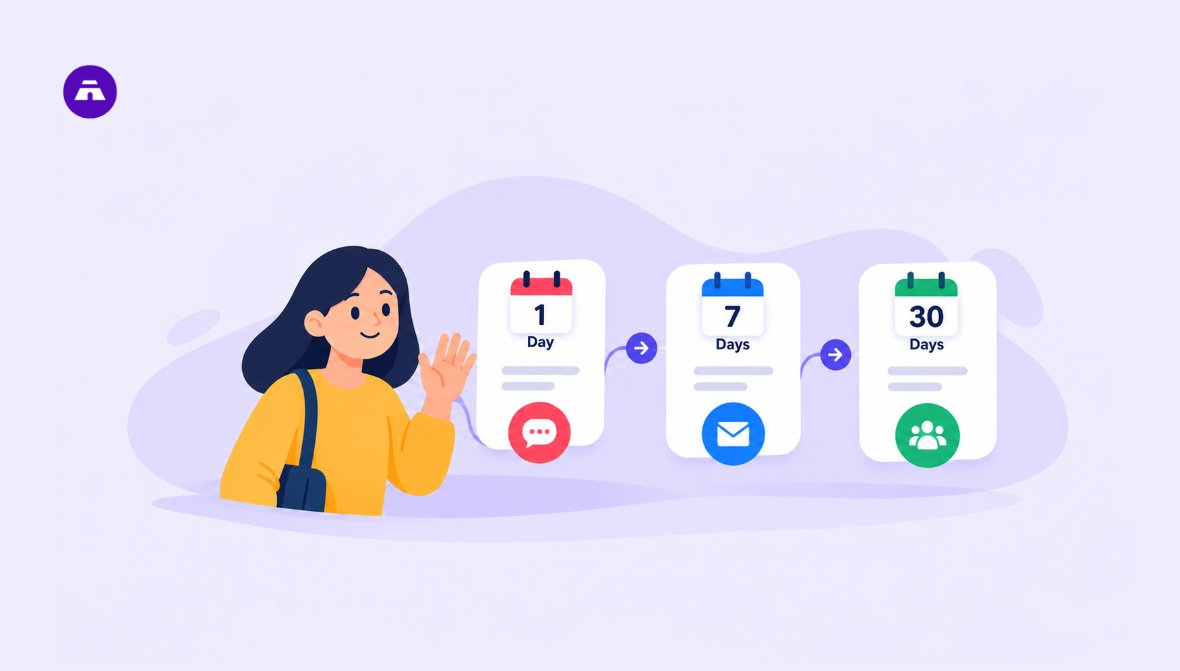
Imagine this: a family stops by your church on a Sunday. They love the music, a friendly face welcomes them at the door, and they leave with a visitor slip.
Until one day the slip goes into a drawer, and by the following Sunday they could be anywhere else or no longer searching for church.
This is why church visitor follow-up exists, and it can be done without a church staff of ten or custom program software. All you need is one person who is willing to step up and a straightforward process for a typical week.
Below is a 4-week plan, Who Does What, sample WhatsApp messages you can cut and paste, what you can do when folks don't reply, and a tracking sheet to keep it all together.
What is church visitor follow-up?
Church visitor follow-up is the method by which you contact the first-time visitors after they leave so they realize that someone saw them and that they are invited back. Typically, it's a few encouraging emails or calls during the first months, ending with one clear next step.
It's like having after Sunday.
For the visitor, a first visit is a low-stakes visit. They know no one, and they are quietly making a judgment about whether this is somewhere to them. One short phrase, "we're glad you came," is usually the only indication that anyone even noticed.
In this guide, each message and call will be referred to as a touch. There are five in the plan below.
Who should handle visitor follow-up in a small church?
Let the lead handle the process and make that lead the only person to message.
The failure is straightforward. Three people may all try to sell the same visitor, or else no one tries because everyone assumed that someone else was doing it. One named lead would have stopped both of those.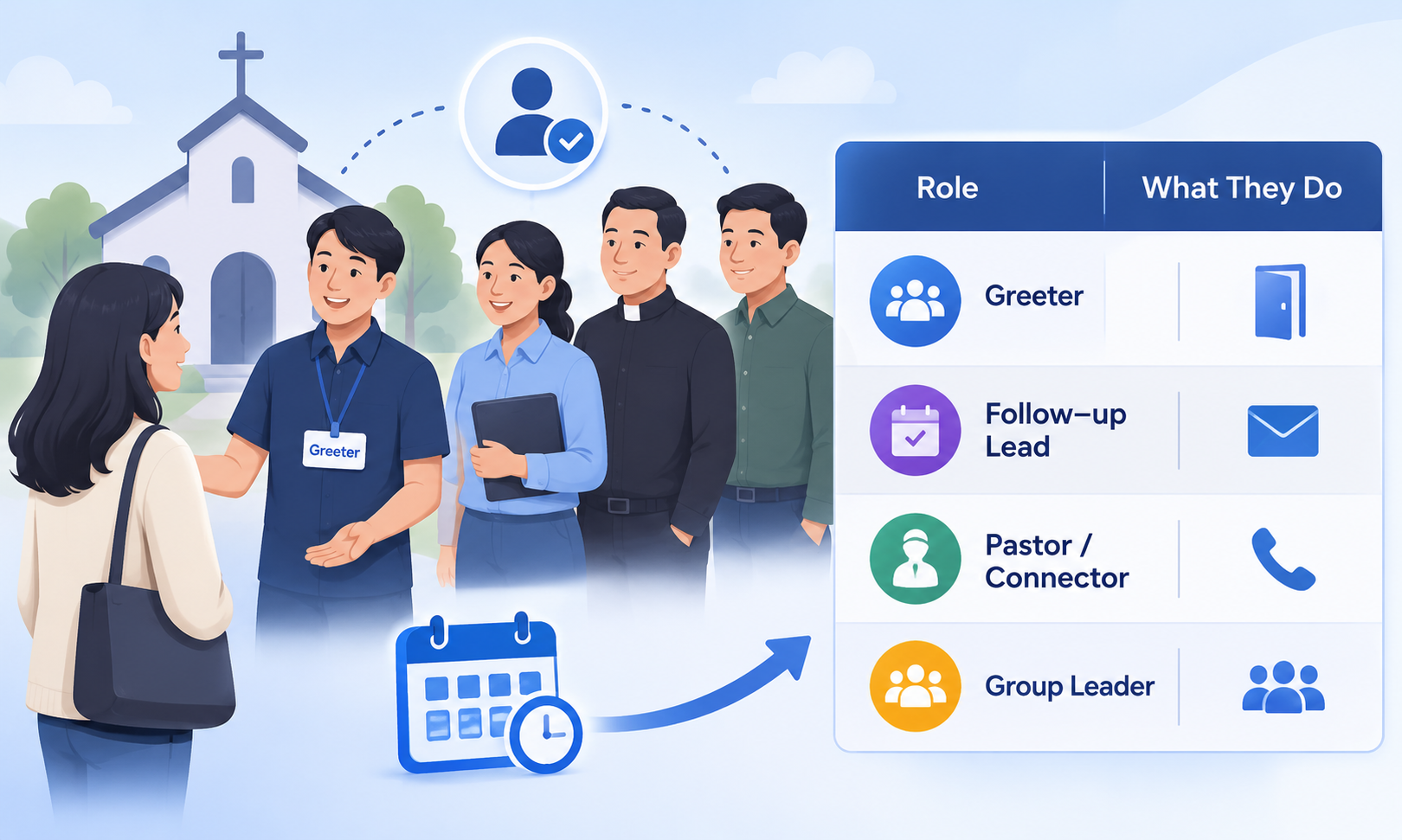
|
Role |
What they do |
When |
| Role
Greeter |
What they do
Welcomes visitors at the door, asks for a name and the best way to reach them, and passes the details on |
When
Sunday |
| Role
Follow-up lead |
What they do
Keeps the tracking sheet, sends the messages and reminds the others |
When
Every week |
| Role
Pastor or connector |
What they do
Makes one short, personal call |
When
Week 1 |
| Role
Group leader |
What they do
Meets the visitor after the lead introduces them |
When
Week 3 |
A small church with only one person can have multiple roles. That's perfectly fine! Keep the follow-up lead as one named person, then ask the pastor and group leader to come in only if your plan calls for it.
Settled roles. Now you need something to follow up with that begins on Sunday.
Launch your church into the future
Everything your ministry needs — giving, events, members, and more. Try it free, no credit card required.
Start Free Trial No credit card • Cancel anytimeHow do you collect visitor details without making it awkward?
Ask for very little, then share why, and let the visitor decide how they want to speak to you.
Ask for:
-
First name
-
Phone or WhatsApp number
-
What is the best way to contact them (WhatsApp, call, or both)
-
An optional question, for instance, "Is there something that you wish us to know?"
Ask in a seemingly natural or casual manner:
-
A small slip at the door, or on every seat.
-
A QR code that is displayed on the welcome screen which can be scanned to open a short form.
-
A greeter who greets you by saying, "May I add your name so someone can say hello to you this week?"
Give them a reason to hand over their details. Ask for their permission to contact them before you gather their details. For instance, tell them that you will contact them once in a very friendly manner throughout the week and that you will only forward their details to the people who take care of visitors.
Never ask for the phone number of an unmeasured visitor on a first visit; while other personal details about the visitor for example, date of birth, address, status, and familial details, can be asked on a subsequent visit, which also can include whether they stay. If the visitor would rather not say, simply thank them and let it go.
Store all that you gather in a single, secure location. Find out how in our guide to church data security.
What is the 4-week visitor follow-up plan?
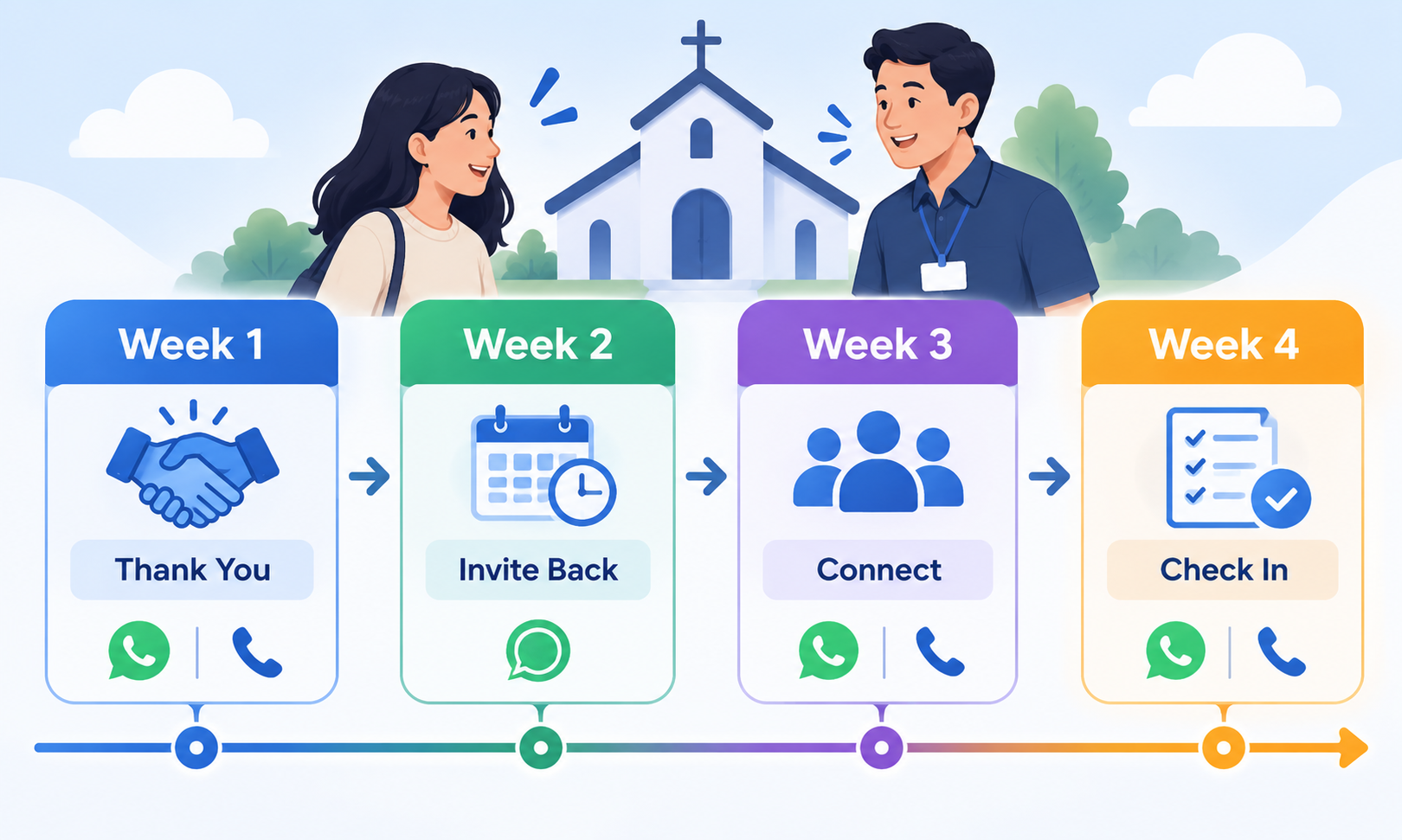
A 4-week visitor follow-up plan can be as easy as: week 1 - thank visitors, week 2 - invite a visitor to come back, week 3 - connect visitors to a person or group, and week 4 - check in with a simple next step.
|
Week |
Who |
What |
How |
| Week
1 |
Who
Follow-up lead, then pastor |
What
Thank you within a day, then a short personal call |
How
WhatsApp, then a call |
| Week
2 |
Who
Follow-up lead |
What
Invite them back with one thing to look forward to |
How
|
| Week
3 |
Who
Follow-up lead and group leader |
What
Introduce one person or group |
How
WhatsApp or call |
| Week
4 |
Who
Follow-up lead |
What
Check in and offer one next step |
How
WhatsApp or call |
[Image 2: 4-week visitor follow-up timeline]
That's five touches over four weeks - two in the first week. The examples below are with WhatsApp. If your visitor would like a text message or a phone call instead, then choose the one they'd prefer.
Week 1: Acknowledge them and personalize it
Send a brief thank you note within a day of the visit and have someone make a phone call within the week.
The first text message has a sole purpose: to let them know you saw them. Keep it short and be impossible.
|
"Hey [Name], [Your name] here from [Church name]. Thanks for attending our worship service this past Sunday. We were glad you attended. Feel free to reply here if you have any questions. Have a great week." |
During the week, make a two-minute call by the pastor or a connector, if the visitor gave you permission during the on ramp phone interview. Listen, don't recruit.
-
"Hi [Name], this is [Name] from [Church]. Can I have a minute?"
-
"Thanks for coming on Sunday! What did you think of your first visit?"
-
Just listen. Then ask, "Is there anything we could do to make a second visit easier?"
-
"We will be eager to see you again. Thank you for taking the time."
Don't send them a lengthy message about the history of your church, and don't get them to join anything right now.
Week 2: Make it easy to come back to them, without pressure
Send one invitation with one reason to come, on Friday or Saturday.
|
“Good morning [Name], we'd love to see you this Sunday at [time]. [One thing that is taking place, like a fellowship lunch following the service.] No response necessary. We just want you to know the door is open.” |
Don't send the whole month's schedule; just one reason would be enough.
Week 3: Link them to just one person or group
Meet just one real person-not a program. A name and a face are more compelling than a litany of ministries.
|
“Hi [Name], I'd like to introduce you to [Group leader's name], the leader of [group or fellowship]. They meet on [day and time] and they'd love to have you. Would you like me to introduce you? [Group leader's name] will only message you if you say yes.” |
Never add a visitor to a group without asking.
Week 4: Check in and provide one next step
Check in with how they are doing, then say one step, not a list.
|
"Hello [Name], it's been a couple of weeks since your first visit. How are you doing? If you'd like a next step, [one step e.g. the fellowship lunch, a chat with the pastor] would be a good starting place. No pressure!" |
Choose the one step that works for your church and do just that.
And on whether you go to your natural rhythm or not. Doesn't matter. But what can you do if they never answer?
What if a visitor does not reply?
Stick with three attempts, then a gentle pause.
In weeks 1, 2, and 3, send the messages and make the week 1 call. If no response, send the message below if there is no response by week 4 check-in instead of week 4 check-in, and cease personal follow-up.
|
"Hi [Name], I'll quit texting so we don't congest your phone. You are welcome at [Church name] anytime. Please feel free to text me anytime. God bless you." |
Some people are busy, shy, or just not ready to reply. Some return with a silent visit, and you want to keep the door open until they're ready.
If a visitor requests that you stop at any time, stop immediately and record it on your sheet.
What should you track?
|
Column |
What goes in it |
| Column
Name and contact |
What goes in it
First name and phone or WhatsApp number |
| Column
Date visited |
What goes in it
The Sunday they came |
| Column
Preferred way |
What goes in it
WhatsApp, call or either |
| Column
Weeks 1 to 4 |
What goes in it
The date each touch was done |
| Column
Owner |
What goes in it
Who is responsible for the next touch |
| Column
Reply |
What goes in it
Yes, no or asked us to stop |
| Column
Next step |
What goes in it
One line, such as “invited to fellowship lunch” |
Be objective in your notes. Rather than comments about the person, write "asked about the children's class”.
Take five minutes every Monday to ask one simple question: Who gets a message from you this week?
The only ones that should be able to access this sheet are the follow-up lead and the pastor. If a church member has a concern with any of the pages, you can read our security guide for church data to know how to determine who should see what.
What if a visitor did not leave any details?
You are unable to follow up on it yourself, but you can have the opener do it for you.
-
If a greeter remembers a first name, they can inform the follow-up lead so someone can greet the individual if they come back next week.
-
Add a WhatsApp number on the welcome page and weekly notices for visitors to message first.
-
Have your greeters watch for returning faces and start by greeting people by name.
-
No one should have their details searched for by anyone else.
The last one is important. The visitor who decided not to give out their number has made a decision, and your church needs to honor it.
What mistakes ruin visitor follow-up?
-
Too much delay. Initiate contact by sending the first message within one day.
-
Messaging overload. Five touches in four weeks.
-
Petitioning for commitment prematurely. The first couple of weeks are for welcoming.
-
Allow multiple people to reach out to a visitor. In this case, assign one follow-up lead to be the point person for all contact so the visitor doesn't get multiple messages.
-
Include your visitor's info in group chats. Save them on the sheet.
-
End of week 1. Terminate if directed to do so by the visitor or if the visitor refuses to interact. Continue into week 4.
What happens after week 4?
Visitors who stick around get into your flow. Visitors who leave get one soft notice one session later.
-
If they keep trying: initiate the relationship by having the group leader take the lead, and when the person shows interest, you can ask if they would like to serve.
-
If they have stopped attending: One friendly reminder message before a special service - if they have agreed for you to contact them again, mark the date on the sheet.
-
If they asked you to stop: don't contact them ever.
Can church management software help with visitor follow-up?
Not at first. A shared sheet and a weekly reminder are enough for most small churches.
This is where software begins to make sense: more than one person is doing follow-up, the spreadsheet is still getting longer, or information is scattered across too many spreadsheets.
If you start comparing options, look for:
-
One place for visitor and member records
-
A way to see who contacted a person and when
-
Access you can limit by person
-
Records that are easy to update from a phone
-
Help moving your existing records across
-
A way to export your data if you ever leave
Tabernacle keeps member records in one place, and its Admin section lets you control what your team can access. If your records are on paper or in Excel, the team helps move them across. Our guide to digitizing church records explains how to start, and Church technology: 10 tools worth using covers other tools worth a look.
The software does not call for you. Someone has to still ring and send the message.
Frequently asked questions
When is too soon to follow up?
If your time out is a day long. A brief thank-you note on Sunday night or even Monday is sufficient. The personal call can be scheduled for the middle of the week.
Should you call, text, or WhatsApp?
Use the one the visitor said they would like. If they didn't say, 'Start with a quick text or WhatsApp message using the contact details they gave you, as this is quick to reply to when they have a chance. Calls can be reserved for the personal touch in week 1.
How often should my church contact a first-time visitor?
In this plan, up to five times in four weeks: four messages and one call. If a visitor has no reply, the last message is the week 4 check-in, instead of week 4. If they reply in the middle of the message sequence, just reply as you would any other conversation – don't send the rest of the plan.
What is the message to be sent in first contact with a visitor?
Smile and identify yourself. Ask them to write back. Just a sentence or two asking for a response, and saying thank you! An example is in the Week 1 section above.
Is it permissible to reach out to someone who did not seek to be contacted?
Provided they gave you contact details and we're aware of what you were going to do with them and had agreed to it. Do not obtain contact details in any other way. If they request it, then cease and record this on your sheet. Privacy regulations vary by country, so see what applies in your country.
Church data security: protect member records
Member lists in spreadsheets, WhatsApp groups and old registers can expose private details. Here are 7 common leaks and…
Introducing Member ID in Tabernacle
Tabernacle now has a Member ID. Add it to new members or in bulk, download it, and search for anyone by their Member ID.

Tabernacle Partner Awards 2026
The Tabernacle Partner Awards 2026 recognizes seven churches who stood out for the thoughtful and innovative ways they’…
