
The Future of Church Giving in India: Why More Churches Are Embracing Digital Giving
Digital giving is changing how churches in India manage and receive donations. Discover how digital payments can make giving more accessible, strengthen financial transparency, and support sustainable ministry.

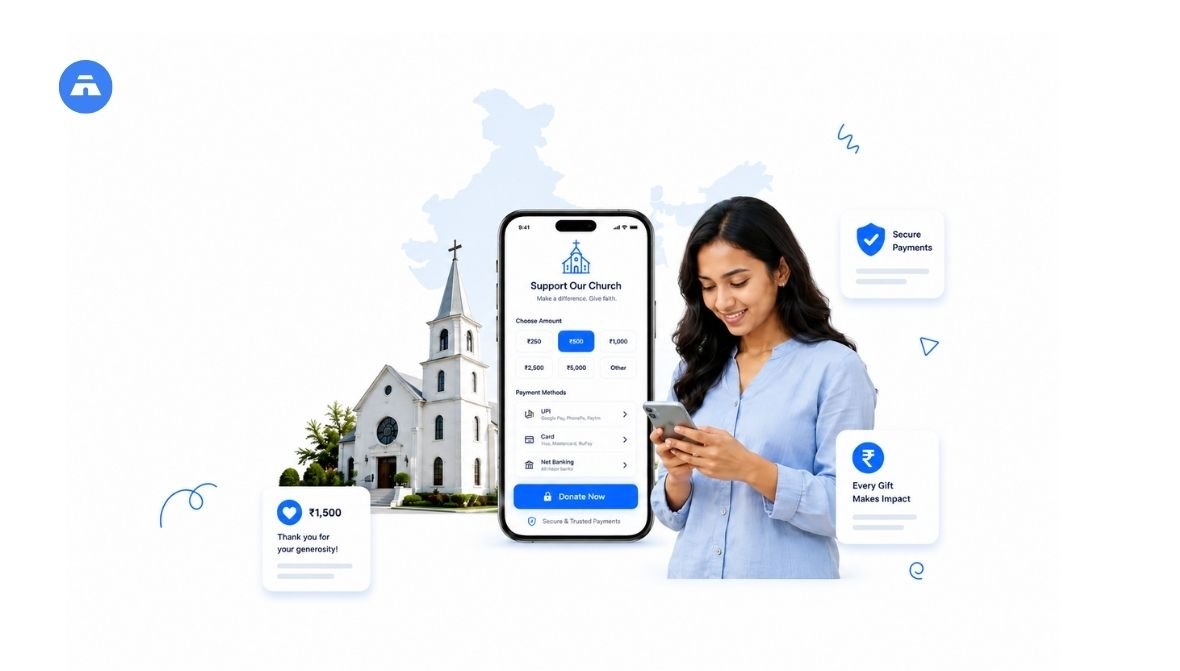
For generations, the act of giving has been a sacred part of Christian worship. Whether through tithes, offerings, mission support, or benevolence funds, believers have faithfully contributed to the work of the Church. While the principles of biblical stewardship remain unchanged, the way people give is evolving rapidly.
Across India, churches of every size, from small rural congregations to large urban ministries, are beginning to ask an important question: How can we continue to encourage faithful giving in an increasingly digital world?
For many church leaders, the idea of introducing digital giving raises understandable concerns. Will it feel less personal? Will our congregation adapt? Is it secure? Is it complicated to implement? These are valid questions and should not be ignored.
The good news is that digital giving does not change the meaning of giving. It simply provides another way for people to practise faithful stewardship, one that is increasingly aligned with how people already manage their finances today.
Biblical Giving Doesn't Change. The Method Can.
One of the biggest misconceptions about digital giving is that it somehow changes the biblical understanding of giving. Whether a believer places cash in an offering basket, writes a cheque, scans a QR code, or sets up a monthly bank transfer, the heart behind the gift remains the same.
Scripture consistently teaches that God values generosity, cheerful giving, faithful stewardship, and supporting the work of His Kingdom. Those principles remain timeless. Technology simply provides a different way to express the same act of worship.
Churches have already demonstrated that embracing technology does not mean losing the meaning of ministry. Many congregations now broadcast services online, while youth ministries use social media to connect, communicate, and engage with their communities. Digital giving is another practical step in that same journey.
In this article, we'll explore why digital giving is becoming increasingly important for churches in India and how it can strengthen, rather than diminish, the ministry of the local church.
- India Has Become a Digital Payments Nation
Over the past decade, India has experienced one of the fastest digital payment revolutions in the world. Today, millions of Indians use UPI to pay for groceries, transportation, restaurants, utility bills, school fees, and even small purchases from local vendors.
For many people, especially younger adults, carrying cash is no longer part of daily life. In many cities and towns, people can go days or even weeks without withdrawing cash because almost every transaction can be completed digitally. While ATMs are still available, they may not always be conveniently located, have sufficient cash, or fit into a busy schedule. Few people want to spend time searching from one ATM to another simply to withdraw money for a single payment.
This shift naturally affects churches. Imagine a church member who intends to give their weekly offering but realizes they have no cash in their wallet. Their desire to give hasn't changed, but the method available no longer matches how they manage their finances.
Offering digital payment options allows churches to meet people where they already are. Rather than limiting giving to whether someone happens to have cash on a Sunday morning, digital options provide another practical way for members to contribute.
- Building Trust Through Transparent Stewardship
- Automatic transaction records
- Digital receipts for donors
- Easier reconciliation of accounts
- Reduced manual bookkeeping
- Better audit trails
- Lower risk of counting errors or misplaced records.
Most importantly, transparent financial systems build confidence among church members. When donors know that contributions are recorded accurately and managed responsibly, it strengthens trust in the church's stewardship.
- Strengthening Financial Accountability and Compliance
Across India, charitable and religious organisations are operating in an environment that places increasing emphasis on proper documentation, accurate accounting, and financial accountability. Churches today need to maintain organised financial records, document donations carefully, and follow sound accounting practices.
Digital giving can make these responsibilities easier to manage. Instead of relying solely on manual cash reconciliation and record-keeping, digital transactions automatically create a financial trail that is easier to organise, review, and report.
For church treasurers and finance teams, this means less administrative burden and greater confidence that financial records are complete and accurate. The goal is not to turn church finance into a technical exercise, but to give those responsible for stewardship better tools to manage the resources entrusted to the Church.
- Making Giving Accessible to a Digital Generation
Every generation has different habits. Today's young professionals, university students, and young families have grown up in a digital-first world. Many rarely visit ATMs. They pay rent online. They order food online. They shop online. They transfer money instantly using UPI. For this generation, scanning a QR code can feel more natural than searching for cash.
Churches that offer digital giving can remove unnecessary practical barriers for younger believers who genuinely want to contribute. This is especially important as churches seek to engage younger generations who will become the future leaders and members of the Church.
Providing convenient ways to communicate that the church understands the world its members live in while remaining rooted in timeless biblical values.
- Ministry Beyond the Church Building
The way churches minister has changed significantly in recent years. Many congregations now livestream services, conduct Bible studies online, and remain connected with members who have relocated for work, education, or family commitments. Church communities are no longer confined to a single location.
Former members who move to another city often continue participating in church life from afar. Mission partners may wish to contribute remotely. Families travelling during holidays may still want to support their home church. Digital giving makes this possible. It allows faithful supporters to continue participating in the ministry regardless of where they happen to be.
Rather than being limited by geography, churches can remain connected with their congregation throughout the week, not just on Sunday mornings.
- Building Greater Financial Stability for Ministry
Every ministry requires planning. Whether supporting missionaries, running children's programmes, organising outreach events, maintaining church facilities, or caring for families in need, churches depend on financial stability.
One of the lesser-known benefits of digital giving is predictability. Many digital platforms allow recurring monthly donations. This can help churches better understand expected income, prepare realistic budgets, and make long-term ministry decisions with greater confidence.
Instead of wondering how much funding will be available each month, church leaders can gain clearer visibility into their financial position. Better planning ultimately enables better ministry.
Addressing Common Concerns About Digital Giving
It is completely normal for churches to feel hesitant. Questions like these often arise:
-
Will older members be comfortable using it?
-
What about people who still prefer cash?
-
Is digital giving secure?
-
Will giving become less meaningful?
-
Will implementation be difficult?
The encouraging news is that churches do not have to choose between traditional and digital giving. Many churches successfully operate a hybrid approach, continuing to receive cash offerings while also providing digital options.
This allows every member to give in the way they feel most comfortable. Digital giving should expand opportunities for generosity, not eliminate existing practices.
A Journey, Not an Overnight Change
Every church moves at its own pace. Some begin with a simple QR code. Others introduce online giving through their website. Larger churches may eventually integrate giving into a church management platform that handles donations, receipts, member records, and financial reporting in one place.
There is no single "right" way to begin. What matters is taking the first step. The goal is not to become more technological for its own sake. The goal is to make giving easier, strengthen stewardship and transparency, and support the ministry of the local church.
Looking Ahead
The future of church giving in India is not about replacing tithes or changing biblical principles. It is about embracing tools that help churches serve their congregations more effectively in a changing world. Digital giving can help churches meet people where they are, strengthen financial accountability, simplify administration, and support sustainable ministry for years to come. The methods may evolve, but the mission remains the same.
Churches have already learned that technology can expand the reach of ministry without changing its purpose. Online worship, livestreaming, social media, and digital communication have become familiar parts of how many congregations connect with their communities. Digital giving is another way to thoughtfully extend that same principle into the financial life of the Church.
As more churches across India begin this journey, the question is no longer simply whether digital giving has a place in ministry, but how churches can adopt it thoughtfully, securely, and in a way that honours both biblical stewardship and the needs of today's congregation.
If your church is just beginning to explore digital giving, you don't have to do everything at once. Start where your congregation is, introduce the right tools thoughtfully, and allow the transition to grow over time. With the right approach, digital giving can be a simple and meaningful way to strengthen the Church's ministry in an increasingly digital world.

Church financial reporting: what to review monthly
What should church leaders review each month? Five key numbers, a sample report with three problems, and a ten-minute w…

Church Budget: A Practical Guide for Churches
Learn how to create a church budget step by step: estimate income, list costs, add a reserve, and check spending each m…

Jesus quotes: 25 sayings and what they mean
25 Jesus quotes from the Gospels, grouped by famous, love, hope, faith and short sayings, each with its Bible reference…
